

London’s financial district still maintains one of the strongest professional dress cultures in Europe. While workplace attire has relaxed across many industries, banking, law, and consulting continue to place significant importance on presentation.
That said, the way professionals dress today is noticeably different from a decade ago.
The modern City wardrobe is no longer about rigid formality alone. It is about balance — looking structured, credible, and polished without appearing disconnected from current working culture.
For professionals investing in bespoke suits in London, understanding these shifts matters. The expectations in Canary Wharf, the City, and Mayfair remain high, but the details of how people dress have evolved.
Banking: Structure Still Dominates
Among all industries, banking remains the closest to traditional British business dress.
In investment banking, private equity, and asset management, the standard uniform is still built around:
- Navy suits
- Charcoal suits
- White or light blue shirts
- Conservative ties
- Dark leather shoes
The emphasis is on consistency and professionalism rather than individuality.
This is where British suit style continues to dominate. Structured shoulders, balanced proportions, and darker tones remain common because they project reliability and authority in client-facing environments.
Many professionals working in the City still commission bespoke tailoring in London specifically for this reason. A properly cut suit performs differently during long working days, travel, and high-pressure meetings.

The Modern Banking Shift
What has changed is the level of rigidity.
Ten years ago, many banks expected:
- Daily tie usage
- More formal shirt styling
- Heavier, more traditional suiting fabrics
Today, some teams — particularly in younger divisions or internal environments — have relaxed slightly.
You now see:
- Softer fabric choices
- Slightly lighter construction
- Open collars on non-client days
- More seasonal variation in tailoring
However, the overall standard remains formal compared to most industries.
For those purchasing custom suits in London, versatility has become increasingly important. Bankers now want garments that maintain authority while feeling more comfortable throughout demanding schedules.
Lawyers: Conservative but Precise

Corporate law firms remain among the most traditional environments in London.
Dress codes here are not necessarily trend-driven. Instead, they are shaped by:
- Client perception
- Professional credibility
- Consistency in presentation
Dark suits continue to dominate, particularly navy and charcoal. Patterns are usually subtle, fabrics are conservative, and fit is expected to be clean without appearing fashion-oriented.
In many cases, lawyers favour:
- Structured jackets
- Mid-weight wool fabrics
- Slightly more traditional cuts
This aligns closely with the principles associated with Savile Row and traditional British bespoke tailoring.
For legal professionals, tailoring is less about standing out and more about eliminating distractions. A well-fitted suit allows the individual — not the clothing — to carry authority.
Consultants: The Most Flexible Category
Consulting firms sit somewhere between banking formality and modern corporate flexibility.
Consultants often move between:
- Client meetings
- Internal workshops
- Travel environments
- Presentations across industries
As a result, their wardrobes need to adapt more fluidly.
This has influenced how many professionals approach tailor made suits in London.
Compared to banking and law, consultants are more likely to wear:
- Softer tailoring
- Lighter fabrics
- Brown footwear
- Slightly more relaxed styling
The goal is still professionalism, but with greater adaptability across settings.
Fabric Choices in London’s Financial District
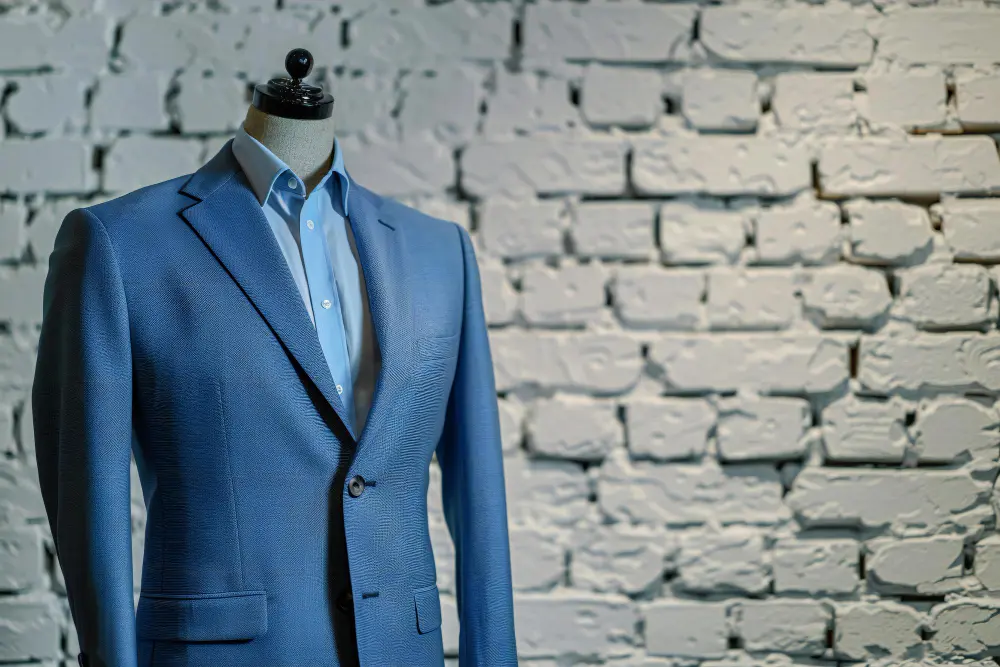
One of the biggest misconceptions about business dressing in London is that heavier fabrics automatically signal quality.
In reality, professionals working long hours increasingly prioritise comfort and performance.
Common choices today include:
- Mid-weight wool
- High-twist wool
- Fresco-style weaves
- Breathable year-round fabrics
These fabrics hold shape while remaining wearable across:
- Underground commutes
- Office heating
- Long seated hours
- Travel between meetings
This is one reason why many professionals invest in bespoke suits in London rather than relying solely on ready-to-wear garments.
Fit Has Become More Important Than Formality
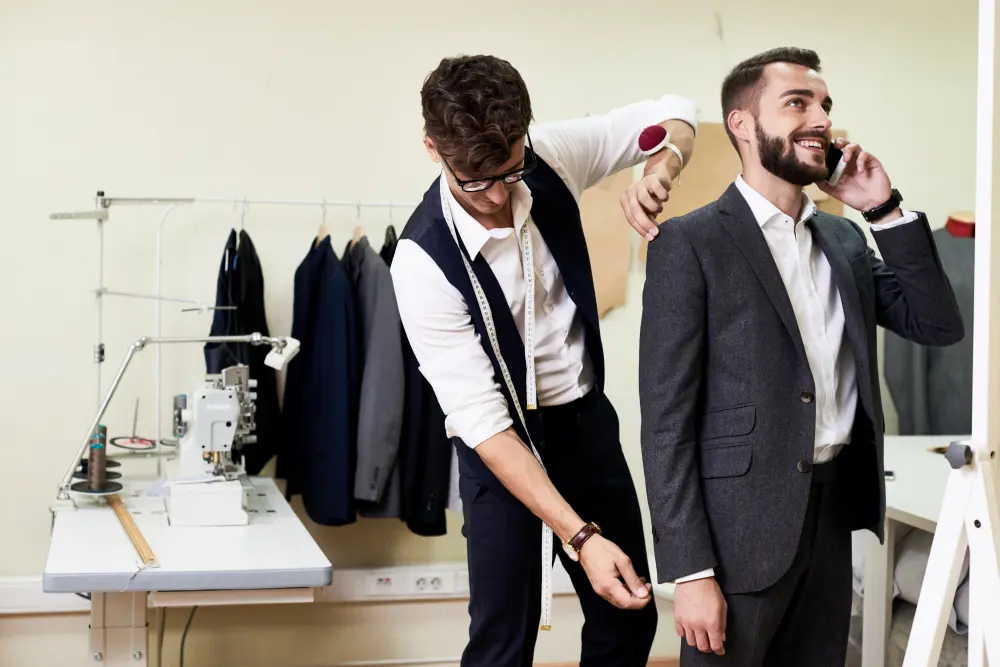
Perhaps the biggest change across all three industries is this:
Fit now matters more than excessive formality.
A poorly fitting expensive suit immediately weakens professional presentation. Meanwhile, a properly balanced navy suit with clean proportions often appears more credible than trend-driven styling.
Professionals today are paying closer attention to:
- Jacket balance
- Trouser taper
- Sleeve length
- Shoulder fit
- Overall proportion
This has increased interest in bespoke tailoring in London, particularly among younger professionals who want garments that feel modern while still appropriate for traditional industries.
The Rise of Practical Tailoring
Another noticeable shift is practicality.
Clients increasingly expect:
- Suits that travel well
- Fabrics that resist creasing
- Garments suitable for both formal and semi-formal environments
- Easier reordering processes
This has changed how professionals build their wardrobes. Instead of owning many suits, many now focus on fewer garments with stronger versatility.
What Professionals Actually Wear Today
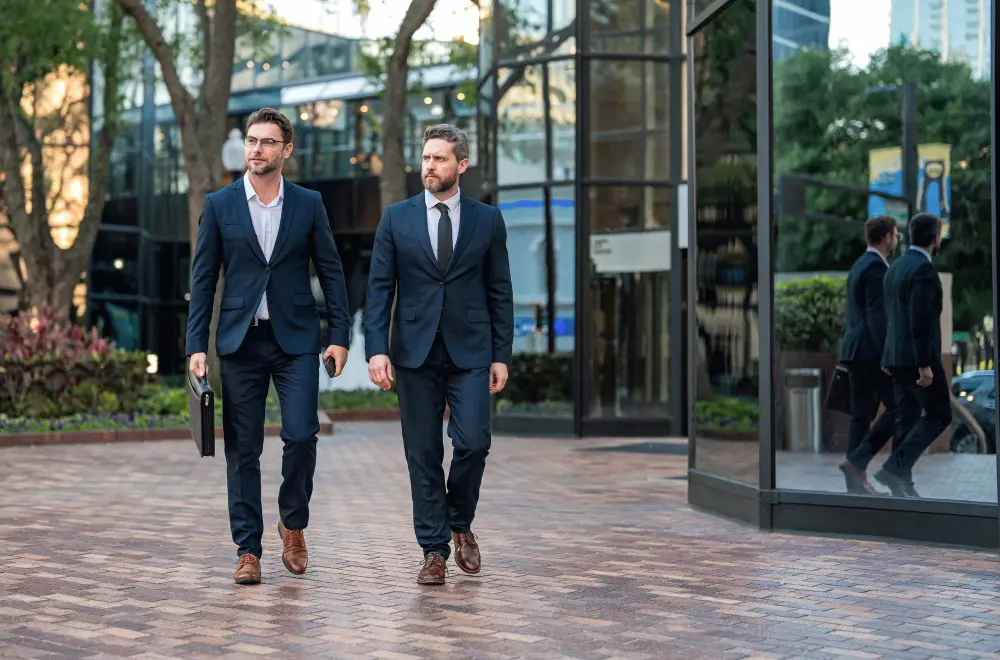
Despite industry differences, there are some common themes across London’s financial district today:
Most Common Suit Colours
- Navy
- Charcoal
- Mid-grey
Most Common Fabrics
- Mid-weight wool
- High-twist wool
- Subtle textured weaves
Most Common Styling Choices
- White shirts
- Light blue shirts
- Structured but not overly padded jackets
- Minimal visible branding
The overall direction is clear: cleaner, sharper, and more practical.
Final Perspective
London’s financial district still values professional dressing more than most industries. But the definition of professionalism has evolved.
Today, the focus is less on rigid rules and more on consistency, fit, and practicality. Professionals want tailoring that supports demanding schedules without feeling outdated or overly formal.
For those investing in bespoke suits in London, the goal is no longer simply to look formal — it is to look credible, composed, and appropriate across a range of modern professional environments.
FAQs
1. Does House of Tailors create bespoke suits for professionals working in banking, law, and consulting?
Yes. House of Tailors works with professionals across London’s financial district, creating bespoke suits in London that are tailored to the expectations of industries such as banking, private equity, law, and consulting. Each garment is designed around the client’s role, lifestyle, and professional environment.
2. What suit styles do House of Tailors recommend for London’s financial district?
For most professionals, House of Tailors recommends versatile business suits in navy, charcoal, and mid-grey. These colours remain the standard across banking and legal sectors while offering flexibility for meetings, presentations, and client-facing responsibilities.
3. Can House of Tailors help build a professional wardrobe beyond a single suit?
Absolutely. Many clients use House of Tailors for ongoing wardrobe planning, including business suits, trousers, jackets, formalwear, and seasonal tailoring. This helps professionals maintain consistency across their wardrobe while reducing unnecessary purchases.
4. What fabrics does House of Tailors recommend for professionals who wear suits regularly?
For clients who wear tailoring frequently, House of Tailors often recommends mid-weight wool, high-twist wool, and other durable fabrics that perform well throughout the year. These fabrics provide comfort during long working days while maintaining shape and structure.
5. Does House of Tailors offer convenient fitting options for busy professionals in London?
Yes. House of Tailors offers flexible appointments, including home and office consultations, making bespoke tailoring in London more accessible for professionals with demanding schedules. This allows clients to experience a personalised tailoring service without disrupting their work commitments.